Cultivar Mixtures Stabilise Wheat Baking Quality
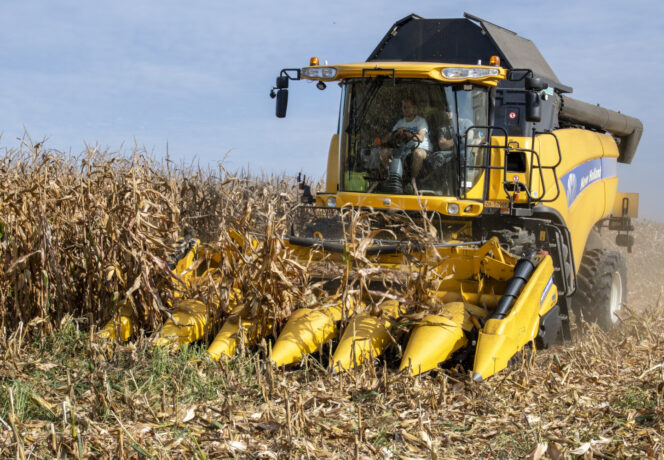
Photo: Carole Parodi,
Agroscope
An Agroscope study shows that breeding cultivar mixtures is an effective strategy for mitigating the effects of changing abiotic conditions and maintaining stable wheat quality.
Building diversity into agricultural systems is a promising way to increase the resilience of agricultural production. In particular, cultivar mixtures are arousing growing interest in Europe as a practical way of stabilising wheat yields. To date, however, their impact on wheat baking quality has scarcely been documented.
This study examined the effects of cultivar mixtures on grain and wheat quality, and on the stability of this quality. The experiment involved eight Swiss wheat cultivars (Molinera, Bodeli and CH211.14074 as class TOP cultivars, Schilthorn, Falotta, Campanile and CH111.16373 as class 1 cultivars and Colmetta as a class 2 cultivar) grown in pure stands, in all possible two-cultivar mixtures and in an eight-cultivar mixture. The study was conducted over three years (2020/2021, 2021/2022 and 2022/2023) and at three different locations (Changins, Delley and Utzenstorf), which allowed for an evaluation of baking-quality stability in both the mixtures and pure stands.
No change in quality in the mixtures…
The results showed that the effects of the mixtures – i.e. their average performances compared to the pure stands – were neutral or negative for the majority of wheat-quality parameters. Similarly, this study showed that the mixtures generally obtained equivalent yields to the pure stands.
For the two-cultivar mixtures, the study demonstrates that the qualitative classification corresponds to the lowest quality category of its constituent parts (for example, a C1-TOP mixture would be classified as C1; C1-C2 would be classified as C2, and C2-TOP would be classified as C2). It should also be noted, however, that mixtures of the same quality class remain in this class (i.e. a TOP-TOP mixture is still classified as TOP).
Furthermore, these effects were not due to changes in the proportions of the cultivars within the mixtures, but rather to cultivar-specific reactions in response to being grown in a mixture.
…but greater stability in different environments
The mixtures allowed for improved quality stability in all the environmental conditions considered in the study. This result suggests that mixtures can buffer environmental variations by means of cultivar compensation, while pure stands are more likely to experience extremes of quality (both high and low) due to their uniform response.
Thus, cultivar mixtures can be particularly well adapted to variable environments, where they would be likely to perform more predictably than pure stands. If this concept has been widely explored and validated with regard to yield stability in cultivar mixtures, our results suggest that it also applies to parameters associated with quality, thereby expanding the benefits of cultivar diversity beyond that of productivity.
Conclusions
- Wheat cultivar mixtures do not change flour quality compared to pure stands.
- The quality of a mixture is close to that of its lowest-quality component.
- Cultivar mixtures stabilise wheat quality in variable environments, which suggests that they can mitigate the effects of abiotic variations on baking quality.
Bibliographical reference
Cultivar mixtures stabilize wheat baking quality.