Alternative Forage Plants as Catch Crops
Photo: Rainer Frick,
Agroscope
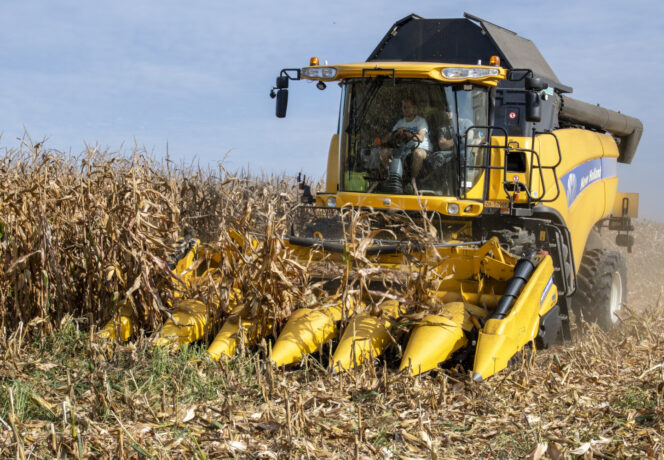
Interest in drought-adapted alternative forage plants is growing. What is their potential as catch crops? A study by Agroscope highlights the advantages and limitations of a selection of these crops.
Interest in forage crop species native to tropical, Asian or Mediterranean regions is on the rise as summer droughts become increasingly frequent. These species can maintain growth even during periods of severe water scarcity.
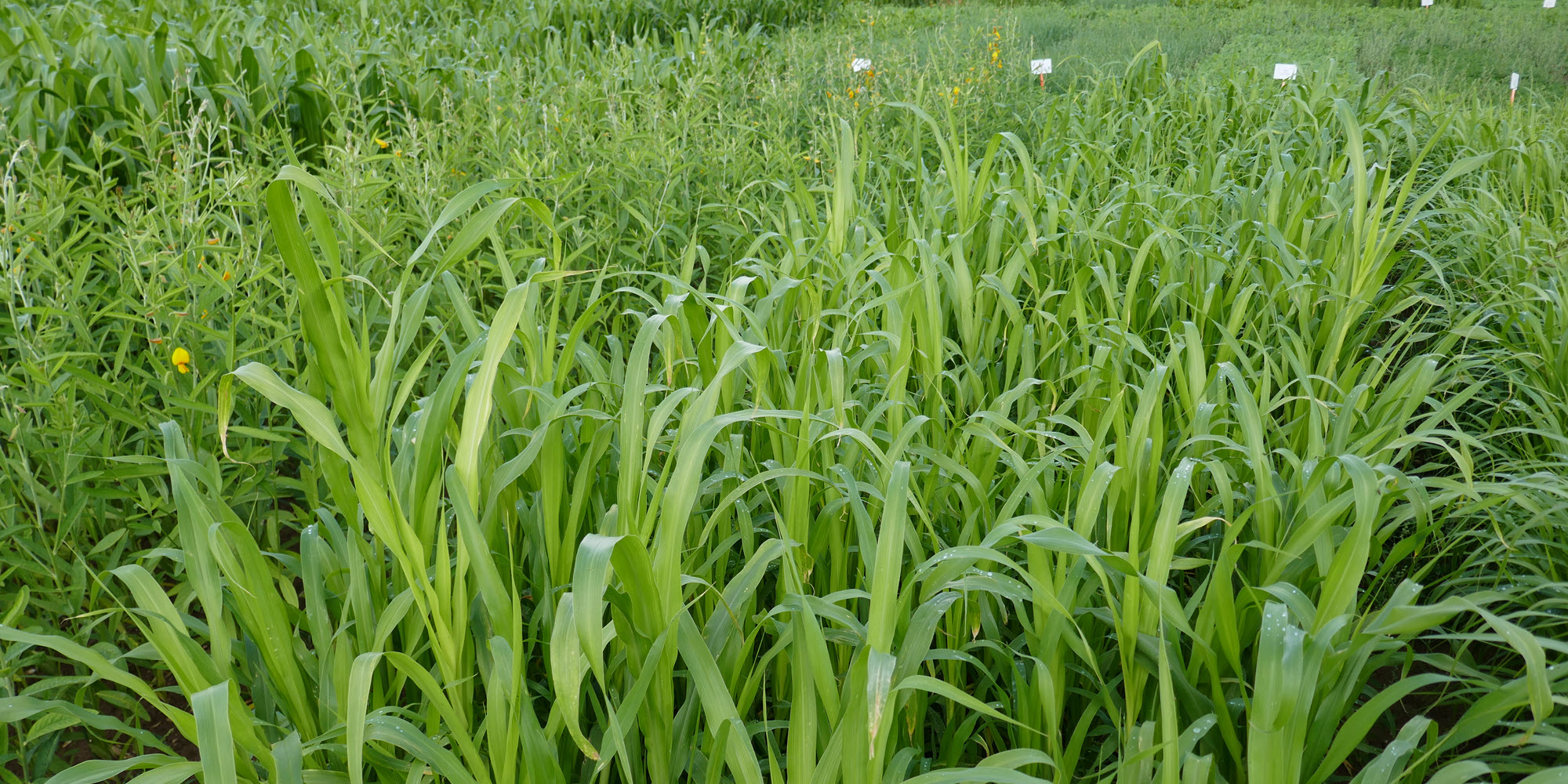
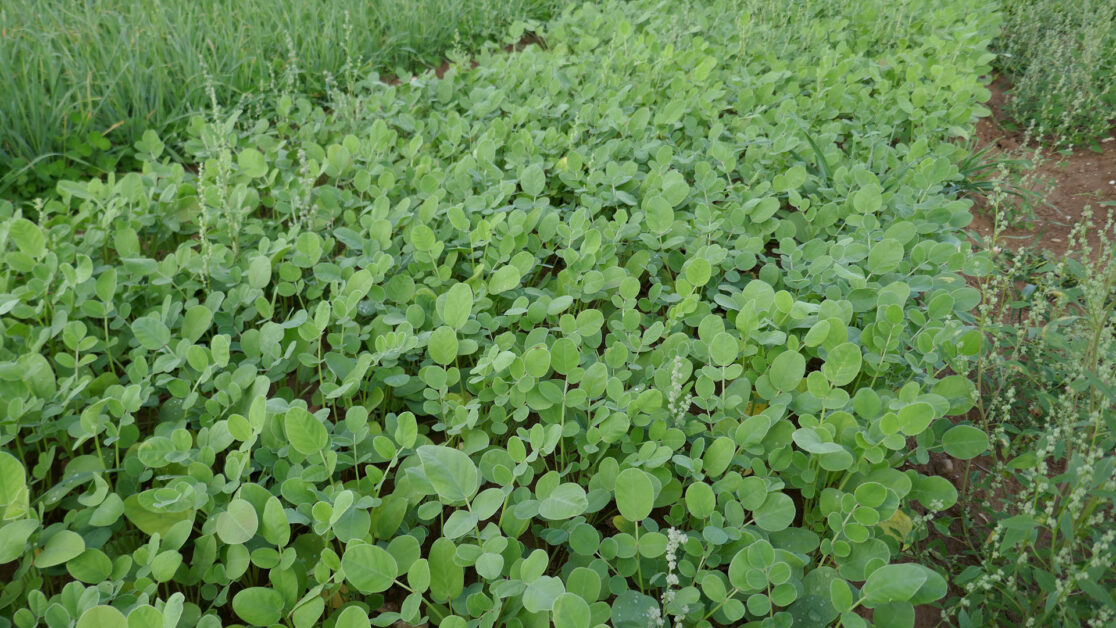
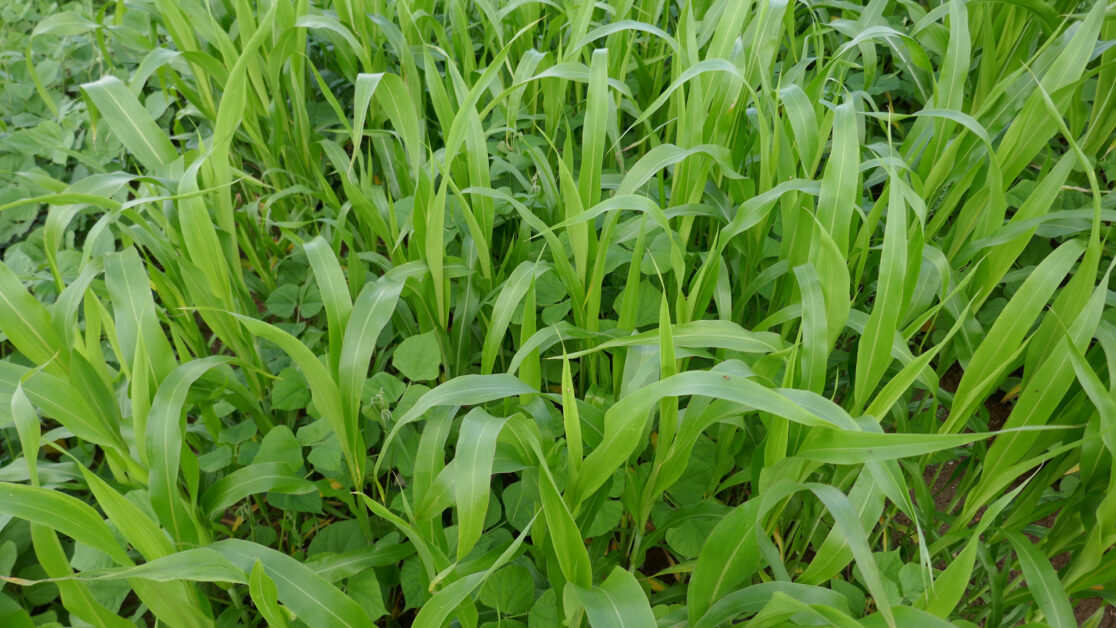
In 2020 Agroscope conducted in Changins (VD) a trial of twenty species on small plots to investigate their performance as summer catch crops. The species tested included C4 plants (green maize, sorghum, foxtail millet, pearl millet, teff) as well as black oat, paddy rice, legumes (annual lucerne, blue lupin, sulla, forage lentil, squarrose clover, cowpea, lablab), guizotia, Tartary buckwheat and camelina. Their growth, yield and forage quality were compared.
Youth development and soil cover
The catch crop trial ran from 6 August to 30 September. The weather conditions were very favourable (sufficient rainfall and warmth) during the 55-day growing period. Each species was sown in pure seed. The thousand-seed weight of the different species was used to determine their seeding density and depth.
The youth development, soil cover and general impression were evaluated using a visual scoring system. Green maize, sorghum, cowpea and lablab germinated in less than six days, while blue lupin and squarrose clover took more than 15 days. Soil cover 25 days after sowing was poor for several species, especially forage lentil, blue lupin, sulla, annual lucerne and squarrose clover. The general impression, which includes vigour, density and uniformity of vegetation cover, was good for foxtail millet, guizotia, paddy rice, black oat and camelina.
Yield and nutritional value
Dry matter (DM) yields varied substantially depending on the species. Taking advantage of the favourable conditions, green maize recorded the highest yield at more than 63 dt of DM/ha. Multi-cut sorghum produced 44 dt/ha, followed by buckwheat, camelina and foxtail millet (32 to 33 dt/ha). Several species, most notably the legumes, produced low yields of 20 dt/ha. Unfortunately, although the C4 plants produce large quantities of biomass, they provide only moderately digestible, fibrous forage with low energy levels of 5.0 MJ NEL (net energy of lactation) per kg DM. However, the nutritional values of several species such as black oat, sulla, paddy rice, guizotia and buckwheat are promising. The legumes are characterised by high crude protein levels. It should be emphasised that the lablab provided a high yield of quality forage when combined with multi-cut sorghum.
To better exploit the potential of the species tested, it would be interesting to grow them in association with other forage plants whose quality in terms of yield, nutritional value and growth is known.
Conclusions
- When grown as a pure seed, most of the trialed species of forage plants native to tropical, Asian and Mediterranean regions do not make suitable catch crops either because of their low biomass yields, poor forage quality or slow development.
- Multi-cut sorghum is without doubt the most promising species as it can produce high yields even in very dry conditions.
- More convincing results could probably be obtained by growing these crops in association with forage crops whose attributes are already well-established; for example, a mix of lablab and sorghum or sorghum and Berseem Clover.
Bibliographical reference
Plantes fourragères alternatives en tant que dérobée.