Risk of Exposure to Dressed Seed is often Underestimated
Photo: Gabriela Brändle,
Agroscope
A recent study shows that the risk of exposure during activities involving seeds treated with plant protection products is not always properly understood. Information provided to agricultural professionals should be improved.
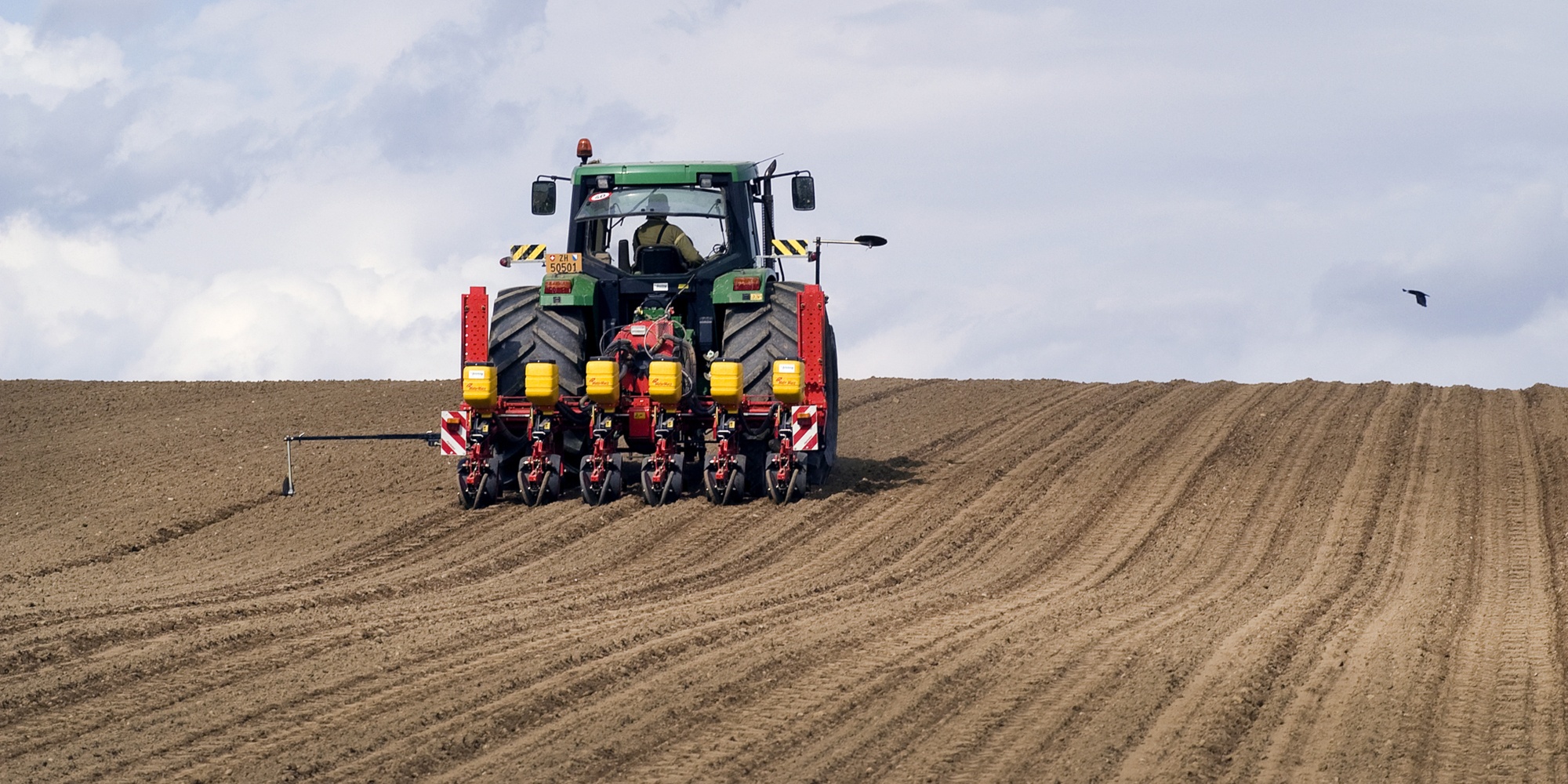
Seed used in arable farming is often treated with plant-protection products (PPPs) to protect it against diseases and pests from germination onwards. Handling this seed can produce dust containing residues of active substances. In Switzerland, the regulations stipulate that sacks containing dressed seed must state the safety measures to be taken when opening the sack and loading the seeder. Specifically, these instructions include the wearing of suitable protective gloves as well as the avoidance of the creation and inhalation of dust. Despite this, the actual perception, comprehension and application of these measures by their professional users in the field remain little documented.
In this context, Agroscope and its partners Unisanté, Proconseil and the Canton of Vaud conducted a study with the aim of evaluating the extent to which the safety messages printed on the sacks of treated seed are effectively perceived and applied by professional users in Switzerland. Another objective was to identify any need for additional information or clarification regarding the risks associated with handling this seed.
An online survey of a representative sample of Swiss agricultural professionals handling seed was conducted in 2024. The data collected focused on professional practices, risk perception, understanding of the legal instructions for handling seed, the identification of activities increasing the risk of exposure, and the use of personal protective equipment.
Risks not always taken seriously enough
Out of the 190 respondents, a majority indicated that they were exposed to dust when handling seed, particularly when loading the seeder. A significant gap was observed between the perceived risk and the action of protecting oneself, particularly in the case of young people.
Although the majority of respondents stated that they had consulted the seed labels bearing information on the treatment products, their toxicity and usage precautions, gaps were identified in the understanding of risk, particularly regarding those activities requiring protective measures.
Communication strategies in need of improvement
The results underscore the need to improve communication strategies regarding the risks of exposure, specifically by stressing the importance of the information stated on the labels. The regulatory measures should be supplemented by informational material suitable for the different farming populations in order to better raise awareness of protective measures to be taken during activities involving risk during the sowing period.
Conclusions
- Farmers may be exposed to dust when handling seed, in particular when loading seeders.
- A significant gap was observed between the perceived risk and the action of protecting oneself, particularly among the young.
- Although the majority of respondents stated that they consulted the seed labels, gaps were identified in the understanding of the risks, particularly regarding those activities requiring protective measures.
- The regulatory measures should be supplemented by informational material suitable for the different populations.
Bibliographical reference
Perception des risques d’exposition associés à la manipulation des semences traitées.