Sampling Exhaled Air Instead of Blood: New Method for Measuring Energy Status of Dairy Cows
123fr.com
After calving, dairy cows often have an energy deficit and mobilise body fat, with consequences for health, animal welfare and performance. Agroscope researchers have now shown that cows’ energy status can also be measured from exhaled air.
High-yielding dairy cows often ingest less energy in early lactation than they need for body functions and milk production. The resulting negative energy balance forces the organism to mobilise fat reserves, with implications for metabolism, animal welfare and performance.
Method for determining energy status without taking a blood sample
The energy balance of cows provides information on their energy status and is at present only measurable using individual data on feed intake, bodyweight and performance. Biomarkers such as β‑hydroxybutyrate (BHB) and non-esterified fatty acids (NEFAs) provide information on fat metabolism, but require complex blood analyses. Volatile organic compounds in exhaled air could represent a promising.
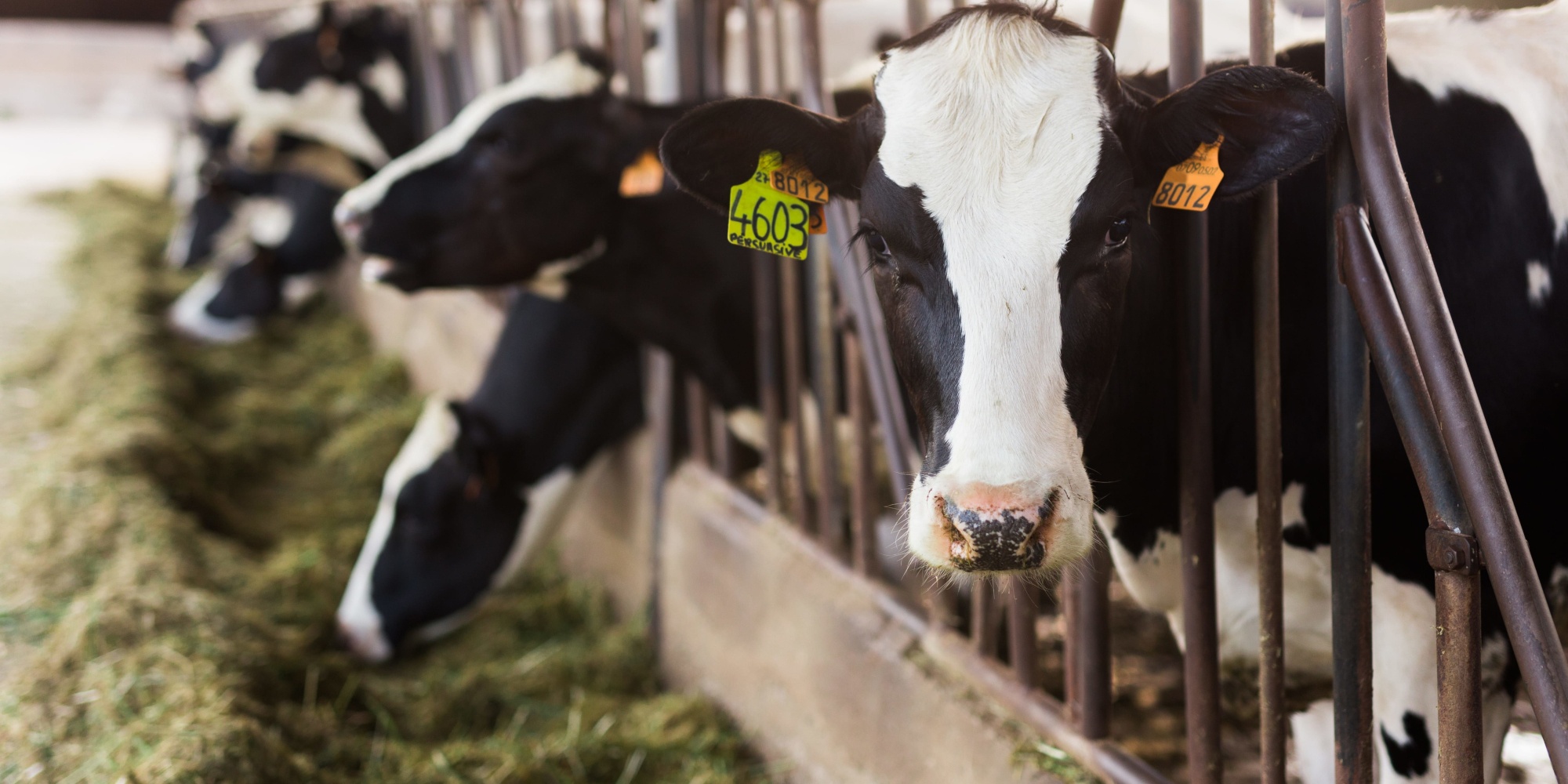
To test this hypothesis, Agroscope researchers analysed data from a feeding trial with 34 Holstein dairy cows in the early lactation phase. The cows were fed according to their requirements with fresh herbage and concentrates, and the researchers analysed their energy balance, the mentioned biomarkers and the exhaled air in lactation weeks 5, 7 and 10.
Three compounds in exhaled air correlate with energy balance
Three fatty aldehydes whose concentrations differed between the lactation stages were identified in the exhaled air of cows exhibiting a negative energy balance in lactation week 5 and a positive energy balance in lactation week 10. Fatty aldehydes are volatile organic compounds produced during the breakdown of fatty acids. All three fatty aldehydes correlated negatively with the calculated energy balance to a similarly strong degree as the classic biomarkers BHB and NEFA.
The researchers hypothesise that the fatty acids released during fat breakdown are partially converted by the metabolism into fatty aldehydes and exhaled via the lungs. In humans, this mechanism is described in the context of oxidative stress and lipid breakdown; for dairy cows, direct evidence is still lacking.
Potential for biomarkers in exhaled air
The results suggest that exhaled fatty aldehydes could serve as biomarkers for assessing the energy status of early-lactating dairy cows. Correlation strengths are comparable to those of the established biomarkers BHB and NEFA. For practical application, however, further studies are needed.
Conclusions
- At present, assessing the energy status of dairy cows requires individual monitoring of feed intake, bodyweight and performance, or the use of biomarkers.
- Specific compounds in the exhaled air of early-lactating dairy cows, specific fatty aldehydes and the classic biomarkers show similarly strong negative correlations with the energy balance.
- Based on these compounds in the exhaled air, methods could be developed to determine energy status without the need for a blood sample
- Before practical application, however, validated measuring methods, larger datasets and clarification of the synthesis pathways of the fatty aldehydes are needed.
Bibliographical reference
Exhaled aldehydes as promising compounds to describe the energy balance of lactating dairy cows on a fresh herbage–based diet.