Seed Treatment Can Be Evaluated on a Case-by-Case Basis
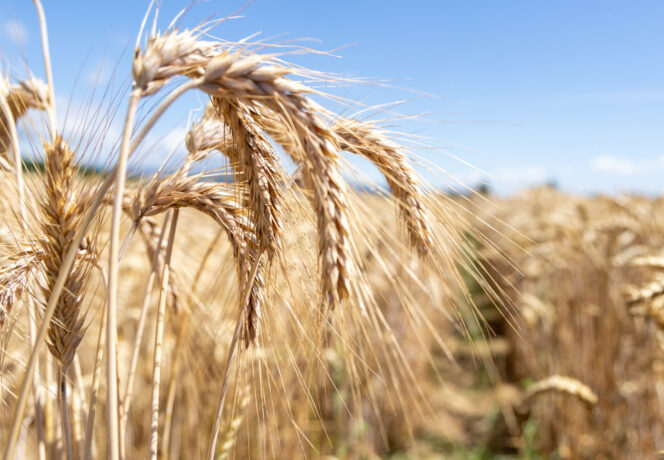
Photo: Gabriela Brändle,
Agroscope
Seeds are generally routinely treated with plant-protection products to safeguard yields. A study conducted on wheat seeds and based on new field data shows that when disease pressure is low, this routine treatment offers no benefit in many cases.
Plant diseases are among the main reasons for yield losses worldwide. Seed treatments – usually chemical-based – are therefore widely used to protect crops at an early stage. This practice, however, is coming under increasing critical scrutiny: the risks for the environment, water quality and biodiversity as well as the plant-protection product reduction targets, increase the need to take action.
At the same time, alternative non-chemical methods are being developed, such as thermal treatments or physical procedures. The efficacy of these methods, however, remains difficult to assess, particularly under practical conditions, owing to the lack of data coming from the field.
Alternatives to chemical seed treatments: comparison in the field
A three-year study on winter wheat provides data on the effects of chemical or alternative treatments (Thermoseed, electron beam and mustard-based treatments) of seed on agronomic parameters such as yield, protein content, thousand-kernel weight and micronutrients, as well as on bacterial and fungal microorganism communities associated with winter wheat. This multiyear field trial conducted in Switzerland thus helps determine the conditions under which seed treatments genuinely contribute to the safeguarding of yields.
No effect on yield or quality
Neither the chemical nor the alternative seed treatment led to measurable improvements in key agronomic indicators such as yield, protein content or kernel weight. The results show that under the practical conditions of the study, these treatments brought no additional benefit to production.
No change in soil or plant microbiology
The composition of the microbial communities at root or seed level also remained unchanged, regardless of the treatment chosen. Hence, no effect, either positive or negative, on soil microbial processes was noted.
Importance of disease pressure
The seed lots used only exhibited low levels of pathogen infection. In this context, no benefit from the treatments could be demonstrated in the case of either the alternative or chemical procedures. The results suggest that seed treatment offers few advantages when disease pressure is low. Furthermore, in our field trial, alternative treatments showed no harmful effect on the plants, and could therefore be the subject of additional studies.
Conclusions
- Seed treatments can be evaluated on a case-by-case basis, inter alia as a function of actual disease pressure in the seeds or soil.
- The use of chemical treatments could be reduced without yield losses when risk is low.
- Alternative treatments remain an option, particularly in systems requiring a high level of environmental or health protection.
- Monitoring systems or diagnostic tools could enable a more targeted, needs-based approach.
- For agricultural extension and public policy, there is the option of promoting differentiated strategies, bearing in mind the site and risks.
Bibliographical reference
Agronomic Performance and Microbial Diversity of Wheat Following Organic and Synthetic Seed Treatments: A Three-Year On-Farm Swiss Field Study.