Sorting the meadow: Genetic methods to separate species and cultivars
Foto: Damian, Käch
ETH Zürich & BFH-HAFL
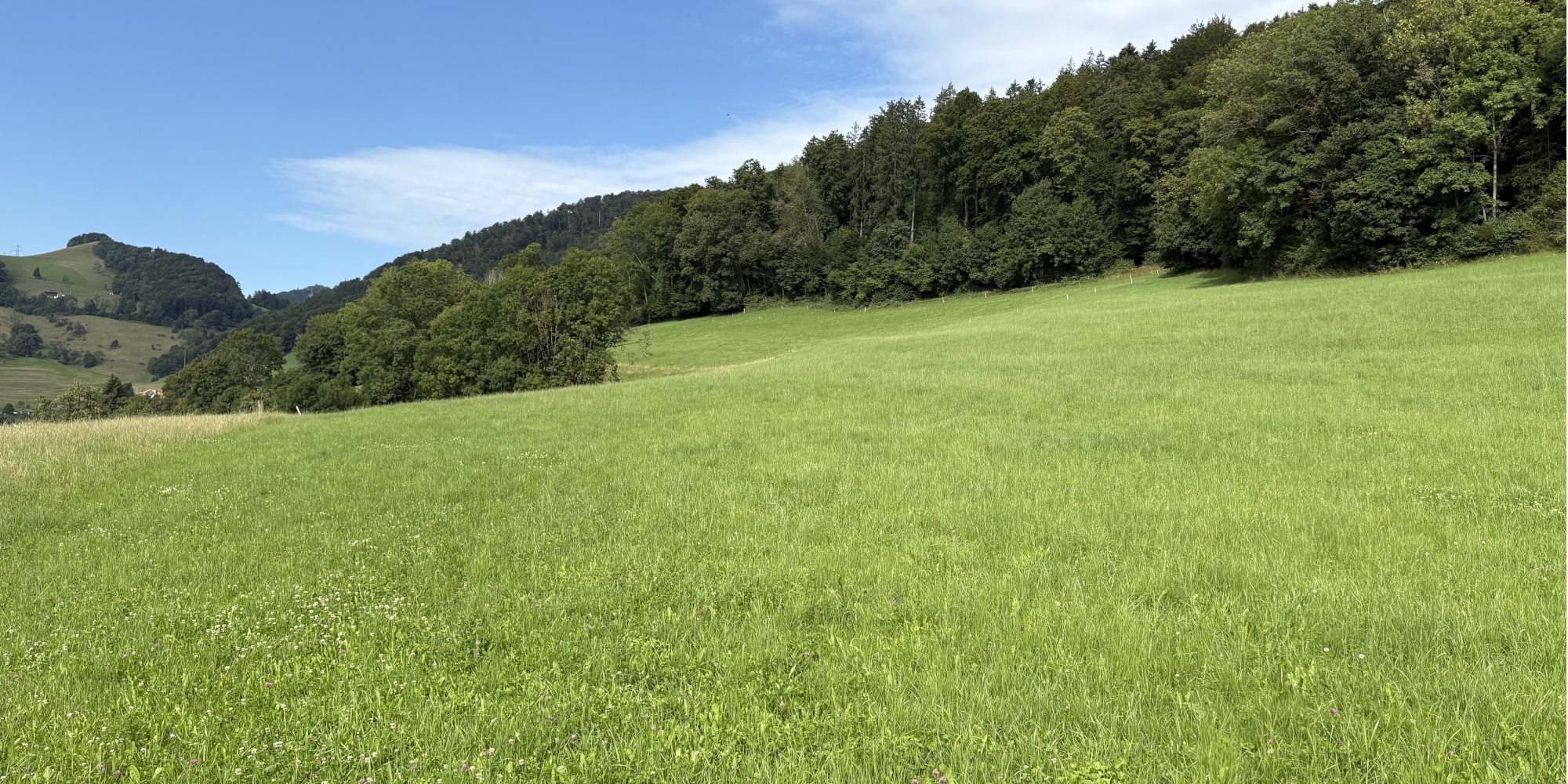
Permanent grasslands consist of multiple species and cultivars, whose compositions change over time. Identifying such changes visually is laborious at species level and impossible at cultivar level. Two DNA-based methods were tested for this purpose.
Swiss permanent grasslands are species-rich mixtures of grasses, legumes, and herbs. Management practices and changing environments can negatively affect species composition and genetic diversity. Grasslands of lower diversity are less resilient to biotic and abiotic stressors. Therefore, detecting changes in composition is key to intervene accordingly and protect these valuable ecosystems, which also harbour genetic resources for breeding. Visual monitoring at the species level is labor-intensive and requires high expertise, whereas changes within species cannot be detected visually. Molecular genetic methods offer promising solutions to detect changes between and within species. Two DNA-based approaches, multispecies amplicon sequencing (MSAS) and genotyping-by-sequencing (GBS), have been evaluated for their applicability in monitoring grassland composition. MSAS targets specific genomic regions that are present in multiple species and have high diversity within species. In contrast, GBS samples many different regions across the genome, allowing much finer resolution than MSAS.
Detecting species composition with multispecies amplicon sequencing (MSAS)
Using MSAS, species in mixtures containing three grasses (cocksfoot, perennial ryegrass, and meadow fescue) and two legumes (red and white clover) were successfully separated. In addition to separating species, MSAS also allowed differentiation between cultivars within species. The basis for this was the simulation of shifts in cultivar composition by preparing samples based on two cultivars in ratios of 0:100, 50:50, and 0:100. These samples were successfully separated, and the 50:50 mixture was positioned between the two pure cultivars in discriminant analyses, reflecting its genetic composition. This demonstrates that MSAS can capture diversity between and within species at a reasonable resolution.
Evaluating detection limits of two DNA-based methods
To further assess the detection limit, MSAS was applied to six cultivars of perennial ryegrass. The results were then compared to those using GBS. Both genetic approaches could successfully separate the six cultivars, while GBS additionally could reflect the breeding history of the cultivars. In addition to samples containing one cultivar, mixtures of two cultivars were prepared at ratios of 50:50 and 75:25. Using MSAS and GBS, 50:50 mixtures could be separated from the corresponding single-cultivar samples and positioned between them in a discriminant analysis. For the 75:25 mixtures, MSAS reached its detection limit. Using GBS, however, the 75:25 mixtures could be separated from the corresponding 50:50 mixtures and single-cultivar samples. These findings illustrate the limitations for MSAS and the added accuracy GBS brings to monitor cultivar composition.
Fazit
- Both multispecies amplicon sequencing (MSAS) and genotyping-by-sequencing (GBS) could be successfully applied to detect differences in species and cultivar composition.
- Both approaches open opportunities beyond monitoring: supporting breeding strategies, seed purity control, and management-specific cultivar development.
- MSAS is promising in monitoring species composition and diversity within species in permanent grasslands.
- GBS offers the higher accuracy needed to detect changes in cultivar compositions within grassland species.
Bibliographical reference
Genetic Diversity Unveiled: Cost-Effective Methods for Grassland Species.