Arable and Specialty Crops in Mountain Areas: from Forgotten Heritage to Resilience Strategy
Photo: Fabienne Buchmann,
ZHAW
Mountain and livestock farming are widely seen as closely linked. Yet climate risks, market pressures and societal change are limiting the strategic options available to many farms. Crop diversification can extend it in site-adapted ways.
For centuries, arable and specialty crops were an integral part of mountain agriculture. With the specialisation in dairy and meat production, they have been largely displaced. Today, changing framework conditions are opening up new perspectives: longer vegetation periods broaden cultivation options in the mountain area, demand for regional plant-based foods is growing, and the Swiss Nutrition Strategy 2025–2032 anchors the promotion of plant-based diets as a strategic objective for the first time. At the same time, domestic production covers only around 35 % of the demand for plant-based foods, with a declining trend.
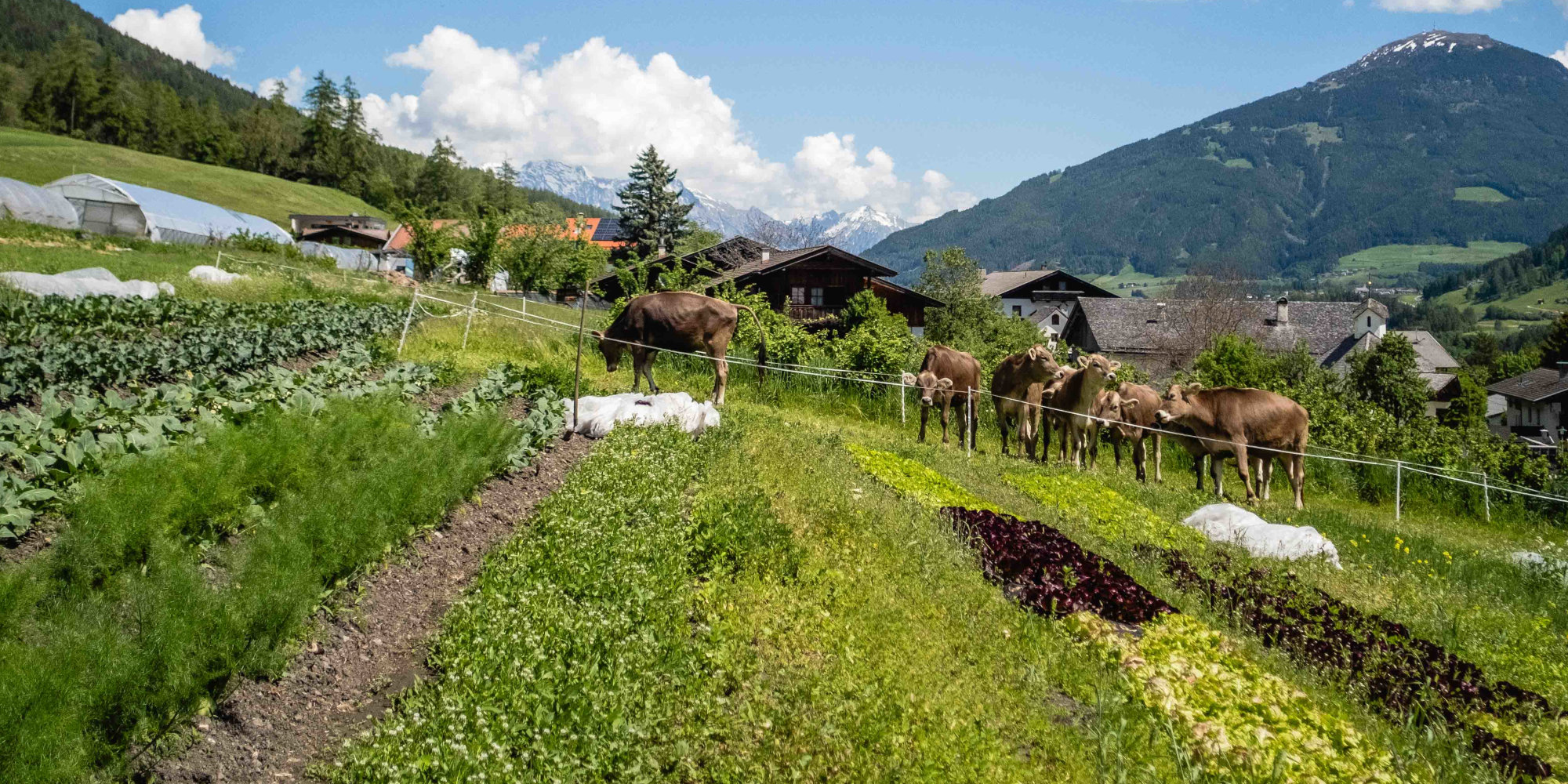
Arable and specialty crops can complement pasture-based livestock farming
A qualitative study with farmers and experts from Switzerland, Austria and South Tyrol shows that arable and specialty crops can complement pasture-based livestock farming in mountain areas in a site-specific manner. As a complementary farm activity, they foster on-farm diversification, strengthen agrobiodiversity and nutrient cycles, and enhance resilience to climate and market risks. Pioneering farms draw on historical cultivation traditions and adapt them to today’s conditions.
Key barriers must be overcome
These potentials, however, face four key barriers. The agricultural support policy system structurally favours livestock production, specialised advisory services for arable and specialty crops in mountain areas are largely lacking, regional processing infrastructures are fragmented, and varieties suited to higher altitudes are insufficiently bred and tested. Knowledge is therefore often built up through costly trial and error. The study identifies three interlocking feedback loops: at the institutional level, the existing framework conditions stabilise the livestock-dominated system and confine plant-based cropping to a niche. This asymmetry extends to the farm level, where knowledge gaps raise experimentation costs and thus the risks for farms interested in entering this branch. That this branch of cultivation persists despite these barriers is largely due to the intrinsic motivation and cooperation of individual pioneering farms – an engagement that, without systemic support, remains limited in scale.
For these efforts to extend beyond individual farms and become broadly effective, these framework conditions must be more consistently aligned with this objective. Agricultural Policy 2030+ provides a concrete window of opportunity in this regard.
Conclusions and recommendations
- Arable and specialty crops in mountain areas are not a substitute for livestock farming, but a site-adapted component contributing to resilience and regional value creation.
- For this potential to extend beyond individual pioneering farms, specialised advisory services and a stronger anchoring in vocational and continuing education are needed.
- Investments in regional processing infrastructure and cooperative solutions, targeted incentives in direct payments, and progress in breeding for higher altitudes can scale up diversification.
- Pioneering achievements turn into a viable development pathway when farm-level initiative, regional cooperation and appropriate support measures interact.
Bibliographical reference
Mehr als eine Nische? Ackerbau und Spezialkulturen im Berggebiet.