Further Potential for Reducing Crude Protein Content in Pig Fattening
Photo: A. Schütz,
Suisseporcs
A further reduction in the crude protein content of pig feed is challenging, but possible. This study shows that nitrogen utilisation efficiency can be improved and emissions reduced without compromising performance or meat quality.
Swiss agriculture is under great pressure to further reduce ammonia emissions whilst ensuring animal-friendly and economically viable production. In pig fattening, crude protein content in feed plays a central role because it significantly influences nitrogen excretion. To support producers in reducing crude protein content, the federal government has launched the ‘Resource Efficiency Contributions (REB) – Nitrogen-Reduced Phased Feeding for Pigs’ programme (contribution period 2023–2026).
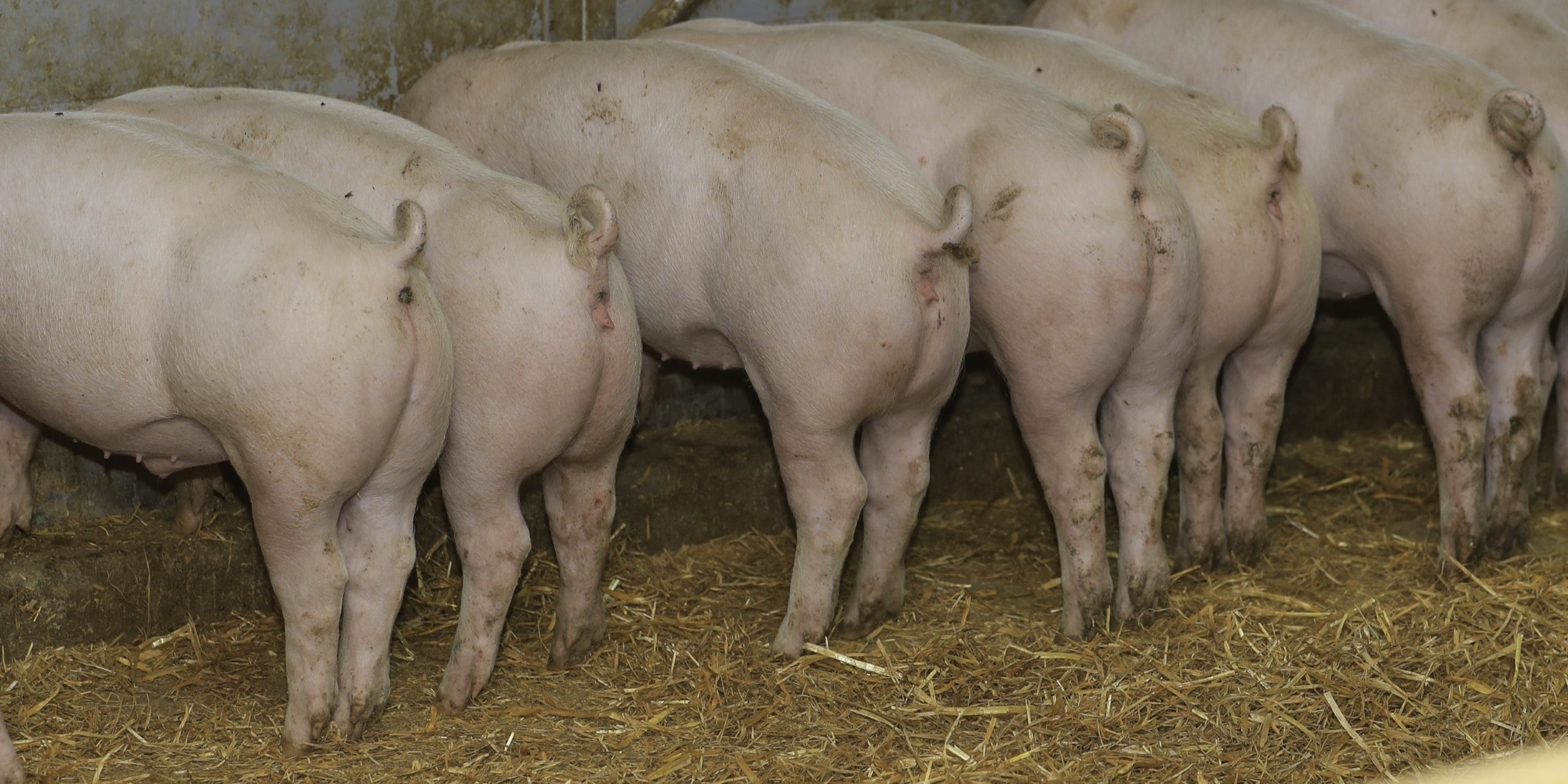
As part of a feeding trial at BFH-HAFL, research was conducted to determine whether a further reduction in crude protein content (below the REB target values) is possible, without compromising performance, animal health or carcass quality. PREMO®-sired crossbred pigs were given two different feed variants. One group received a REB-compliant control feeding program, the other a program with a crude protein content reduced by a further 10%. The supply of essential amino acids was identical in both groups.
Protein reduction without adverse effects on performance and health
The results show that neither daily weight gain nor feed conversion or the percentage of lean meat were affected by the lower protein intake. The animals achieved a daily weight gain of a good 1000 g and a feed conversion ratio of 2.29 kg/kg of growth. These figures are very good by international standards. Animal health also remained stable and there were no feed-related problems.
Significant improvement in nitrogen utilisation efficiency
Particularly significant for the environment and agricultural policy are the effects on nitrogen flows. The protein-reduced diet significantly reduced nitrogen intake and increased nitrogen utilisation efficiency to 54%. This value is close to theoretical maximum efficiencies reported in the literature for fattening pigs.
Observed values well below the official Swiss GRUD reference values – adjustment required
Calculated nitrogen excretion decreased to 2.01 kg per animal, which was 48% lower than the value of 3.9 kg per animal assumed in current GRUD models. The control group also showed significantly lower values compared with the GRUD reference value. The large discrepancies suggest that the principles on which the GRUD values are based are, in some cases, no longer in line with current practice and need to be revised.
Conclusion and recommendations
- Reducing crude protein content alongside targeted amino acid supplementation is an effective and practical measure for reducing nitrogen excretion and ammonia emissions.
- In pig fattening, there is further potential to reduce crude protein content in feed and thereby further reduce emissions.
- Trials under different husbandry and management conditions are necessary to ensure that the results are broadly applicable in practice.
- Long-term effects on animal health, animal behaviour and sustainability must be comprehensively evaluated.
- Results suggest that the GRUD reference values should be adapted to current feeding practices.
Bibliographical reference
Fütterung mit reduziertem Rohproteingehalt in der Schweinemast.