Preparing cattle at home: less stress during slaughter
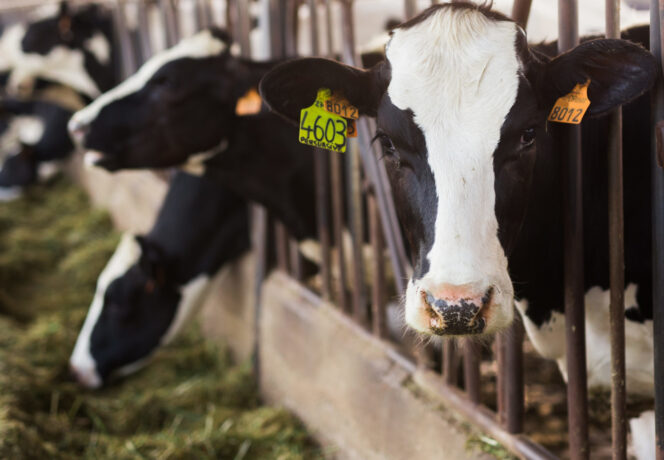
Photo: Eva Föller
Is it possible to prepare cattle at home in a way that reduces their stress at the slaughterhouse? In a comparison, prepared animals showed lower cortisol levels during slaughter than control animals.
Young animals from suckler cow herds typically grow up in a natural environment within stable herd groups and have little close contact with humans. At slaughter, they are then confronted simultaneously with separation, loading, transport, and an unfamiliar environment (noises, smells, strangers, and other animals), as well as narrow single file races. The single-file race in particular is considered a highly sensitive area from an animal welfare perspective: animals often hesitate or move backward here, which can lead to the use of electric prods—with negative consequences for animal welfare and increased stress for employees.
Improved Animal Welfare Through Training: Better Preparing Young Cattle for the Slaughterhouse Environment
Against this backdrop, the project investigated whether stress reactions at the slaughterhouse could be reduced through preparation at the farm of origin. A total of 38 young cattle were trained at least three times on five suckler cow farms: The animals were herded through a narrow panel alley (at least 6 m long, approx. 1 m wide) onto a scale or into a treatment stall using Low Stress Stockmanship (calm herding with pressure/release) and briefly restrained; the alley was only opened / the animal released once it stood calmly (“reward”). As a control group, 37 animals from 19 other farms without comparable prior experience were transported in the same vehicle under the same transport conditions.
Slaughtering took place at a large Swiss cattle slaughterhouse between October 2023 and December 2024. After a waiting period of 30–60 minutes in the lairage pens, vocalisations, backward movements, and the use of the electric prod were recorded in the single-file race. The animals’ behaviour was assessed in the stunning box, and physiological parameters were measured in blood samples. Lactate was determined on-site using a rapid test; cortisol was analysed from the blood serum in the laboratory.
Less acute stress: Trained animals with lower cortisol levels
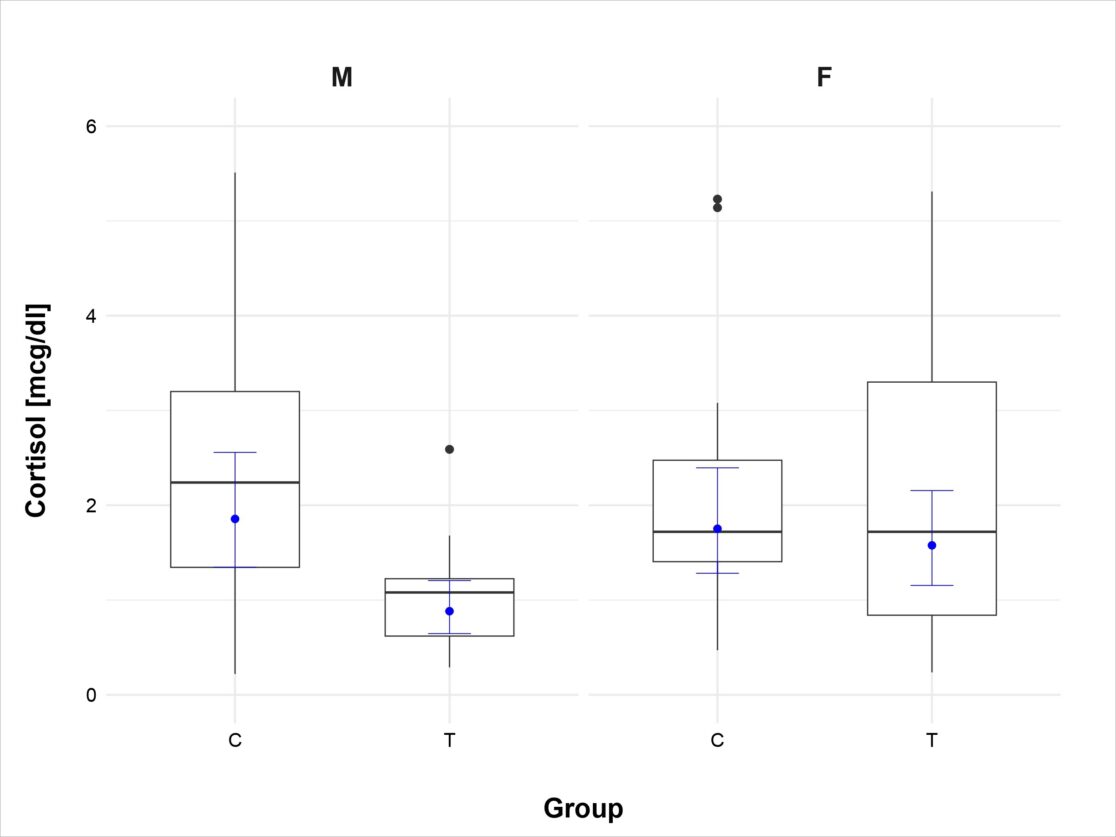
The training did not significantly influence the behavioural parameters recorded at the slaughterhouse, but it did result in a significant difference in cortisol concentration in the blood samples. Particularly in male animals, the cortisol levels of the trained group were lower than those of the control animals, indicating lower stress levels immediately prior to slaughter.
Conclusion and recommendation
- Simple on-farm preparation (low-stress stockmanship and panel walk exercises) can measurably reduce stress levels in young animals—as evidenced by lower cortisol levels.
- The participating farmers rated the training and installations consistently positively and clearly recommend them, as they are also useful for tasks such as weighing, treatments, and sorting.
- The method should therefore be widely recommended and specifically promoted on farms, particularly through training and practical on-farm infrastructure.
Bibliographical reference
Rinder zuhause vorbereiten: weniger Stress bei der Schlachtung .