Attitudes towards Results-based Biodiversity Promotion in Switzerland
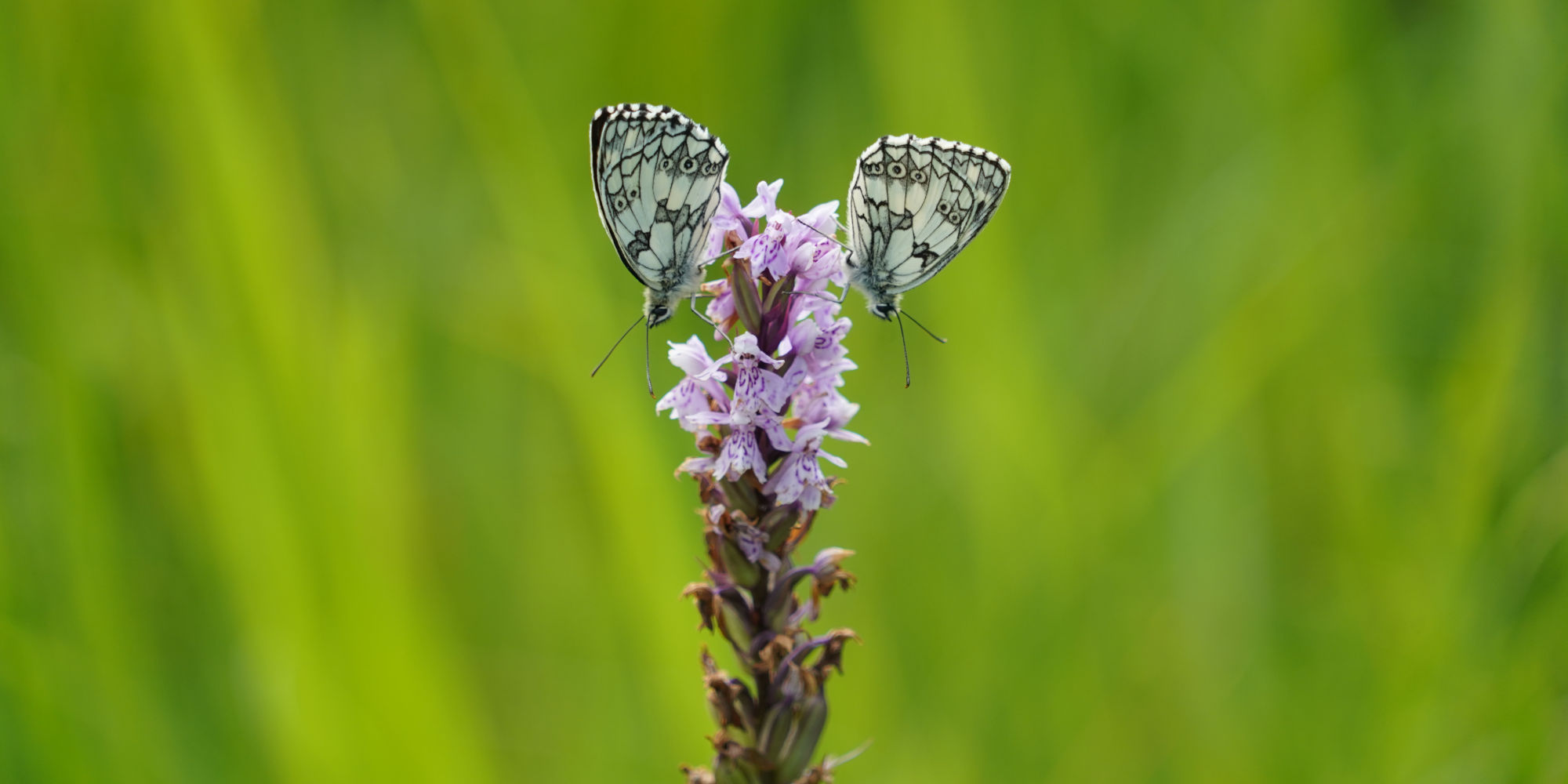
Photo: Marbled white butterfly on orchid, Simona Moosmann, FiBL
Results-based biodiversity promotion is an approach that is being discussed in the context of agricultural policy as an alternative to the current system that is based on implementable measures. The survey shows that there is considerable interest among farmers.
Since the 1990s, Switzerland has had biodiversity contributions for agricultural land, which provide remuneration for the implementation of specific biodiversity-promoting measures. Despite these measures, biodiversity in Switzerland continues to decline. The results-based approach is seen as a promising alternative, as it rewards the actual ecological quality of an area. This gives farm managers freedom in choosing and implementing measures to promote biodiversity. Knowledge transfer and individual advice also play a key role. However, the approach also involves risks. External factors such as weather events can influence the achievement of the desired result.
Approval of Swiss farmers
Farmers were surveyed about their attitudes toward and willingness to implement results-based biodiversity promotion. The basis for this was the results-based approach that has been tested since 2020 in the targeted biodiversity promotion pilot project ZiBiF in the canton of Zurich. Under this approach, farmers receive compensation based on the actual ecological quality of their land and they also receive farm-specific advisory services.
295 Swiss farmers took part in the survey in 2024. The sample is comparable to the farms surveyed in the 2023 structural survey in terms of most characteristics, but not in terms of production system and farm size (organic and IP Suisse farms are overrepresented in this survey; part-time farms, small and mountain farms are underrepresented). The majority of respondents showed great interest in the results-based approach: 68,7 % found the approach good or very good, and 56,4 % could imagine implementing it on their own farms. More than 80 % said they welcomed more freedom and personal responsibility.
Importance of advisory services and knowledge
A key element of the ZiBiF project is the close support provided by advisors who help farmers choose appropriate measures. The survey revealed that this farm-specific advice is essential for the acceptance of the results-based approach. In addition, 87,3 % of respondents consider it good or very good to be able to make greater use of their knowledge of biodiversity.
Group-specific results
Organic farms are more willing to implement the results-based approach than IP Suisse and conventional farms. Approval was also higher among part-time and mountain farms. On the other hand, it was found that willingness to adopt the ZiBiF approach decreases with increasing surface of land managed. It also became clear that farms with a higher proportion of biodiversity promotion areas on their land were more likely to implement the results-based approach. Finally, farmers with higher levels of education and women were also more willing to adopt the approach.
Conclusions and recommendations
- Freedom, local knowledge and personal responsibility: The opportunity for farmers to choose measures themselves, make use of their own biodiversity knowledge and thus have more freedom and personal responsibility in the implementation is appreciated.
- High level of interest despite potential risks:
The farmers surveyed expressed a high level of interest in results-based biodiversity promotion. This suggests that, from the farmers’ perspective, the advantages outweigh the potential risks and thus results-based instruments should be considered in future political reforms. - Individual advice:
Individual biodiversity advice is an important element for farmers to implement the results-based approach and explains the high level of approval. Hence the role of advisory services should be carefully considered when designing such instruments.
Bibliographical reference
Ergebnisse statt Massnahmen? Die Einstellung von Schweizer Landwirtinnen und Landwirten zu ergebnisorientierter Biodiversitätsförderung.