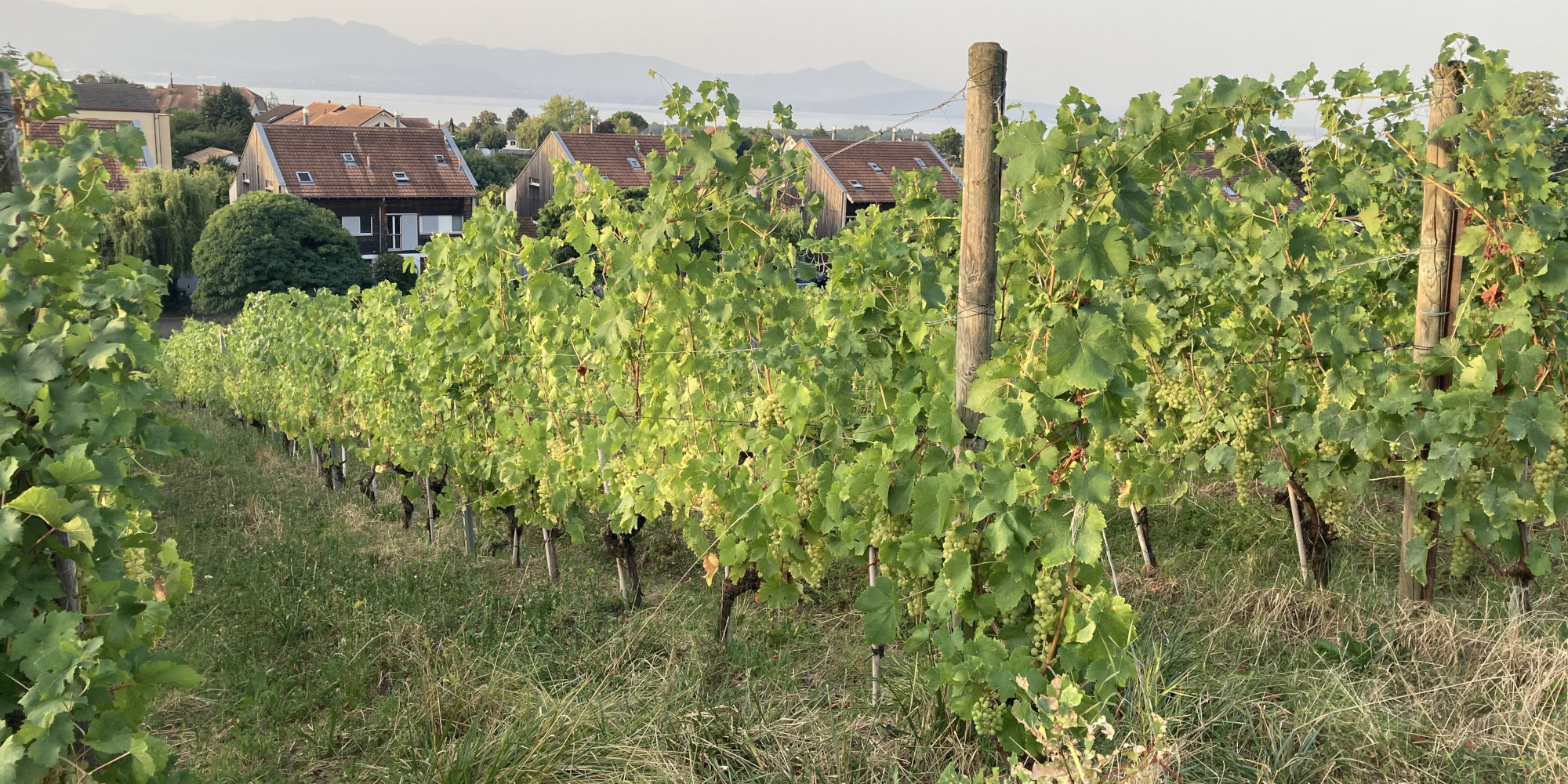
Nitrogen Nutrition Begins in the Vineyard
Photo: Thibaut Verdenal,
Agroscope
The hot, dry years between 2021 and 2025 substantially reduced the yeast-assimilable nitrogen in the musts of Vaud wines – particularly in Chasselas – with direct impacts on fermentation and wine quality.
The Canton of Vaud has a network of over 140 maturation-tracking plots covering the main grape varieties and four wine regions, allowing must composition to be linked to climate, grape variety and pedoclimatic context. The data gathered between 2021 and 2025 show that the drier, hotter 2022 vintage is characterised by higher sugar content, lower acidity, and yeast-assimilable nitrogen (YAN) levels lower than those observed during the years with higher rainfall. In 2022, average YAN levels at harvest reached the lowest levels of the series, with 119 mg N/litre, compared to 154 mg N/litre in 2024 (Fig. 1).
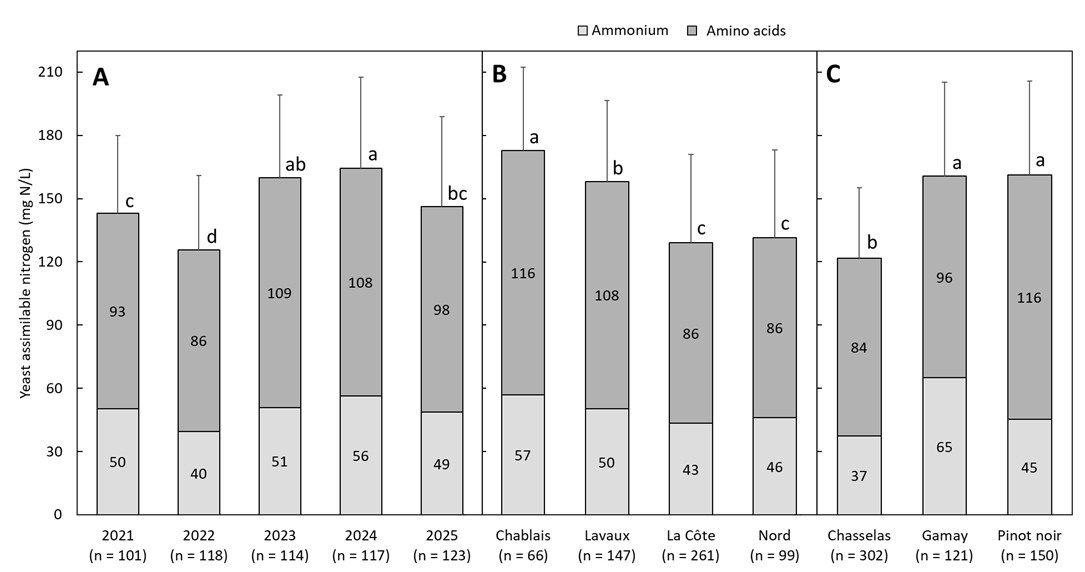
The impact of grape variety is particularly pronounced. Taking all vintages and regions into account, Chasselas has the lowest YAN levels, with 115 mg N/litre on average compared to 149 mg N/litre for Gamay and 153 mg N/litre for Pinot Noir. With Chasselas, nitrogen levels decrease yet further between veraison and harvest by the order of 16.4 % on average, whilst remaining stable overall for Gamay and Pinot Noir. This vulnerability increases the risk of sluggish or stuck fermentation and can limit wine aromatic expression.
The regional differences provide a helpful additional perspective for advisory and decision-making purposes. Chablais and Lavaux grapes have the highest average levels of yeast-assimilable nitrogen –163 and 149 mg N/L respectively – whilst La Côte and Northern Vaud regions stand at 121 and 123 mg N/L respectively. These variations reflect the impact of soil depth and soil hydraulic function: deeply rooted vines are better able to withstand water-nitrogen stress, whilst shallow or compacted soils exacerbate the constraints in a drought year. In this context, soil maintenance and cover-crop control become major influencing factors, since poorly controlled plant competition reduces the vine’s access to water and nutrients.
The lesson is clear: it is not just in the cellar that nitrogen nutrition must be corrected. Its foundations are laid in the vineyard, through integrated soil and cover-crop management as well as leaf-to-fruit ratio and fertilisation management, in order to prevent deficiencies in the must and safeguard the quality of wines, particularly in the case of Chasselas.
Conclusions
- The hot, dry years reduce yeast-assimilable nitrogen (YAN) in the musts.
- The Chasselas grape variety is the primary target in terms of preventing deficiencies.
- The differences between regions confirm the key role played by pedoclimatic conditions.
- Soil and weed management should be considered major influencing factors.
- The Canton of Vaud’s maturation-monitoring network can provide advisory support as well as help with risk anticipation and climate-change adaptation.
Bibliographical reference
Maturité et teneur en azote des moûts de Chasselas, Pinot noir et Gamay: cinq années d’observations dans le canton de Vaud.