When Are Battery Electric Tractors Economically Feasible?
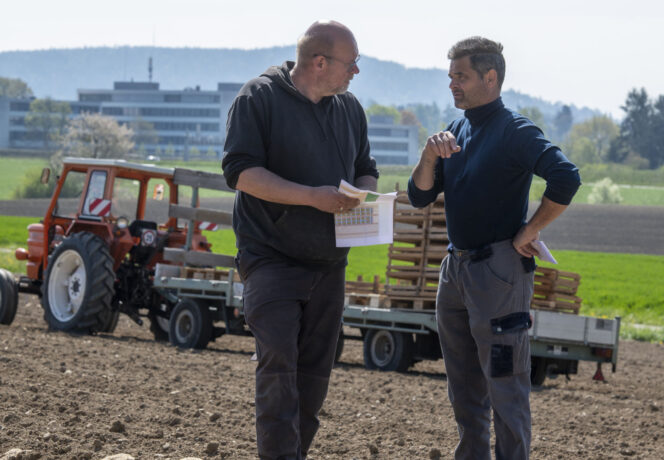
Photo: Stock Fotografie
A systematic literature review shows that battery electric tractors can be economically viable under specific conditions – especially with high annual usage, light-duty tasks, the integration of renewable energies, and a suitable policy framework.
Given their significantly lower CO₂ emissions, battery electric tractors (BETs) are being discussed as an alternative to conventional diesel-powered tractors. Whether they actually represent a viable option in agriculture, however, depends not only on technological progress, but first and foremost on their economic efficiency and on the willingness of farmers to use them. To explore these issues, researchers from Agroscope conducted a systematic review of the literature.
BETs are only economically feasible in certain conditions
The review shows that BETs can be economically feasible in certain conditions, but are not yet competitive in all agricultural systems.
The following factors influence the competitiveness of BETs:
- tractor size and power;
- task intensity;
- annual usage hours;
- price of electricity;
- battery lifespan;
- a supportive policy framework.
Light-duty tasks such as mowing, spraying or light transport – especially on small farms and in horticulture, viticulture, organic farming and hothouse production – are particularly conducive to economically feasible BET use. High annual utilisation is key here, with several studies showing that BETs become cost-competitive first and foremost when used intensively, often in excess of 800 operating hours per year. Economic efficiency also improves when farms are able to combine BETs with their own photovotaic systems, favourable electricity tariffs or autonomous technologies. By contrast, electrification remains more difficult in the case of high-performance tractors and heavy-duty tasks, since present-day battery technology is still associated with high acquisition costs, charging limitations and engineering constraints.
Farmers decide primarily on the basis of economic criteria
The review also shows that farmers primarily evaluate BETs according to economic criteria. The main obstacle to adoption is therefore the high acquisition costs. Further issues are uncertainties in terms of battery-changing costs, range, charge time, infrastructure and long-term performance. Although lower energy- and servicing costs work in favour of BETs, these advantages often do not fully compensate for the high upfront costs under current conditions. Younger, environmentally oriented famers and people with previous experience of electric vehicles tend to be more open to their introduction. Even in these groups, however, the environmental motivation is usually not sufficient on its own to justify the higher price. All in all, economic criteria remain the key prerequisite for wider adoption.
Combination of measures needed to expedite introduction
The results suggest that widespread adoption of BETs will only be achieved with a combination of different measures. Targeted purchase subsidies, low-interest financing options, investment aid for charging infrastructure, agricultural electricity tariffs and incentives for renewable energies at farm level can improve economic efficiency. At the same time, demonstration projects, advisory services and better-prepared information are needed to dispel uncertainties and boost farmers’ confidence in technology. The introduction of BETs on a larger scale therefore requires a two-pronged approach that reduces financial and technical obstacles while improving knowledge transfer, training programmes and demonstration measures.
Conclusions
- Battery electric tractors are currently only economically feasible in certain conditions, particularly within the context of light-duty tasks, high annual usage, supportive policy frameworks, and, in many cases, where the farm has access to its own renewable energy.
- Farmers are primarily influenced by economic considerations when deciding whether or not to introduce BETs. High acquisition costs and uncertainties regarding battery costs, range, charging and long-term reliability remain the primary obstacles to adoption.
- Wider introduction of BETs would require a combination of policies as well as financial incentives, infrastructure and support for renewable energies, further technological advances and knowledge transfer via a combination of advisory services and demonstration activities.
Bibliographical reference
The economic feasibility and farmers’ adoption of battery electric tractors: a systematic literature review.