New Direct Payment Scheme for Regional Biodiversity and Landscape Quality
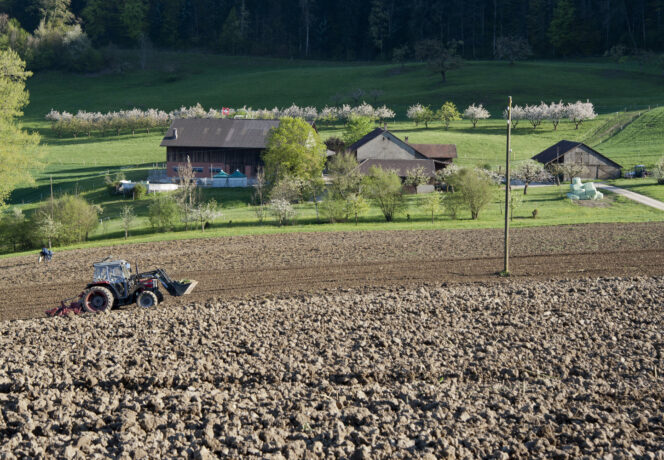
Photo: Gabriela Brändle,
Agroscope
The agglomeration bonus payments and the landscape quality payments are to be merged into a new payment scheme for regional biodiversity and landscape quality. This study evaluates the planned merger from the perspective of agricultural policy literature.
Agglomeration bonus payments and landscape quality payments are important programmes for conserving and supporting regional biodiversity and the quality and diversity of the cultural landscape. In accordance with a parliamentary decision, these two schemes are going to be combined in 2028 to create a new payment scheme for regional biodiversity and landscape quality.
The aim of this merger is to:
- reduce the administrative burden for farm managers,
- simplify enforcement for the cantons,
- reduce the administrative workload for the inspection authorities and the federal government and exploit synergies for supporting biodiversity and the quality of the cultural landscape,
- harmonise the bodies responsible for the projects, as well as their duration and perimeters.
This article analyses previous experiences of the two payment schemes, their strengths and weaknesses and the ensuing implications for the future implementation of the new scheme.
Landscape quality payments: regionally flexible and effective
Landscape quality payments aim to conserve and support the quality and diversity of the cultural landscape. They are regional in their approach, i.e. projects are implemented by regional bodies, approved by the federal government and co-financed by the canton and the federal government. The cantons have considerable discretion when it comes to the design of landscape quality projects. Landscape quality measures are diverse and vary depending on the canton: in Glarus for example, they include boundary structures such as hedges, dry-stone walls and fences, infrastructure such as barns, and other structural elements such as surface water.
Significant spillover effects have been recorded for landscape quality payments, i.e. some measures have been continued voluntarily, making their impact more sustained. Payment for the various measures seems proportionate, although the costs of implementation vary widely. Positive effects on landscape quality include the preservation of regional cultural landscapes and a raised awareness among participating farmers of particular aspects of the landscape.
Agglomeration bonus payments: biodiversity gains despite implementation failings
Agglomeration bonus payments were introduced in 2001 with the aim of increasing species diversity in agriculture. They were intended as a tool to enhance the previously introduced ecological focus areas (EFAs) by locating them in more strategic positions and imposing additional requirements that would better support regional target and indicator species. Here too, the cantons have considerable discretion in terms of the design of the connected habitats payment scheme and define the implementation plan in their own cantonal guidelines. An agglomeration bonus scheme can also be initiated by farmers, farming organisations, communities or associations.
According to studies, agglomeration bonus programmes result in a higher level of biodiversity and thus accomplish their primary objectives. However, evaluations indicate that there is also scope for improvement. While the quantity of connected habitats is generally considered to be sufficient, the quality and choice of location is not. Furthermore, regionalisation is both valued and criticised. It is valued due to the flexibility it allows to select measures which reflect regional characteristics. However, precisely because of this regionalisation and the leeway afforded to the cantons, many projects meet only the minimum requirements of the federal government. Tangible added value is often generated only when committed people who can invest plenty of time and energy are involved in the project.
Challenges facing the new payment scheme: more efficiency, more trade-offs
The merger of the two payment schemes creates opportunities to improve the impact, simplify administration, harmonise bodies and perimeters and exploit synergies between biodiversity and landscape quality. At the same time, it creates conflict between the need for regional design flexibility and clear specifications, between ease of use and effective incentive structures, and between ecological and aesthetic objectives. Ambitious project aims and clear quality requirements are needed if the biodiversity and landscape quality payment scheme is to overcome these challenges.
Conclusions
- Agglomeration bonus and landscape quality payments are important tools for conserving and supporting regional biodiversity and the quality and diversity of the cultural landscape.
- These tools are going to be combined in 2028, in accordance with a parliamentary decision to create a new payment scheme for regional biodiversity and landscape quality. This creates risks and opportunities.
- The merger creates opportunities to improve the impact, simplify administration, harmonise bodies and perimeters and exploit synergies between biodiversity and landscape quality.
- At the same time, trade-offs exist between design freedom and ease of use on the one hand and clear specifications and effective incentives on the other.
- Ambitious project goal and clear quality requirements may resolve these tensions.
Bibliographical reference
Der neue Förderbeitrag für regionale Biodiversität und Landschaftsqualität .