Birdsfoot trefoil and sainfoin are used in mixtures for perennial hay meadows and for tannin-containing fodder. Agroscope is adding two new cultivars of birdsfoot trefoil to the ‘List of Recommended Varieties of Forage Plants’, whilst there is no change in the case of sainfoin.
A comparison of different methods of winter-wheat fertilisation with nitrogen showed that nitrogen surpluses can be significantly reduced by means of site-specific variable-rate nitrogen fertilisation.
Employment in the agricultural sector is declining in many European countries, especially in livestock farming. Direct payments can counter this trend and lead to the employment of more – especially female – family members on the farm.
Although milk-production oriented (MPO) cow breeds have also become established in the mountain region, farms with the dual-purpose ‘Original Simmental’ breed are proving to be economically viable, with lower costs and higher direct payments making up for lower revenues from milk.
Many tile drainage systems on arable land are in need of renewal. Cantons and stakeholders will now be given a decision-making tool enabling them to assess such areas in detail and to find sustainable solutions.
Ammonia emissions from the Swiss farming sector have scarcely declined over the past 20 years. This is because the factors leading to either an increase or decrease in emissions have for the most part cancelled each other out between 2000 and 2020.
High milk yields before drying-off increase the risk of udder infections during the dry period. An online survey highlights what drying-off methods are currently used and how farmers rate the ‘incomplete milking’ approach for reducing milk yield.
Tall oat grass and golden oat grass are typical hay-meadow grasses that are also suitable for forage mixtures. Of the four tall and three golden oat grass varieties tested, only one new variety of tall oat grass is likely to make it onto the List of Recommended Varieties.
FiBL and Agroscope investigated bread wheat varieties to determine their yield and quality stability. The results show that the choice of variety must be adapted to the site and that high yield potential does not go hand-in-hand with a high protein content.
Adapted and high-yielding varieties of forage plants are important for Switzerland as a grassland country. Hybrid ryegrass is a versatile forage grass that, thanks to breeding advances, has become even more persistent, disease-resistant and high-yielding over the past 30 years.
Biogenic amines in foods represent a health risk. Researchers from Agroscope and INRAE investigated the formation of these undesirable substances in raclette cheeses by the bacterium Morganella morganii.
Agroscope has developed a scoring system for plant protection in vegetable crops. The system enables the creation of incentives for reducing the use and environmental risks of plant-protection products and promoting preventive and non-chemical measures.
Dry summers can see a loss of up to 25% of total Swiss roughage production. This is because grassland yields are strongly correlated with summer drought, as shown by a new analysis conducted by Agroscope and the Swiss Farmers’ Union.
Herbicide-resistant weeds are a growing problem throughout the world. Monitoring herbicide resistance in Switzerland allows us to understand the mechanisms behind it and to better manage the use of herbicides.
Agroscope compared crop protection strategies in apple production. Reducing the use of plant-protection products lowered the local ecotoxological risks, but resulted in trade-offs between environmental and economic performance.
A test of five methods using the example of winter-wheat cultivation shows that site-specific nitrogen fertilisation enables more efficient fertilising without adversely affecting yield.
The past 30 years have seen a clear trend towards rising water costs. The supply of agricultural land with water from natural sources is thus coming under increasing pressure.
Bacillus thuringiensis (Bt) bacterium proteins protect Bt maize from being fed on by specific insects. A new, systematic analysis of international field data confirms that non-target organisms in Bt maize are largely spared.
The pandemic has influenced not only our everyday life but also our behaviour. Agroscope looked at which population groups and behaviours experienced or underwent particularly significant changes, and what this means for our health.
Protecting the climate whilst reaping a good harvest is possible if greater amounts of carbon are sequestered in the soil. Agroscope calculated the amount of additional carbon that the soil is capable of storing.
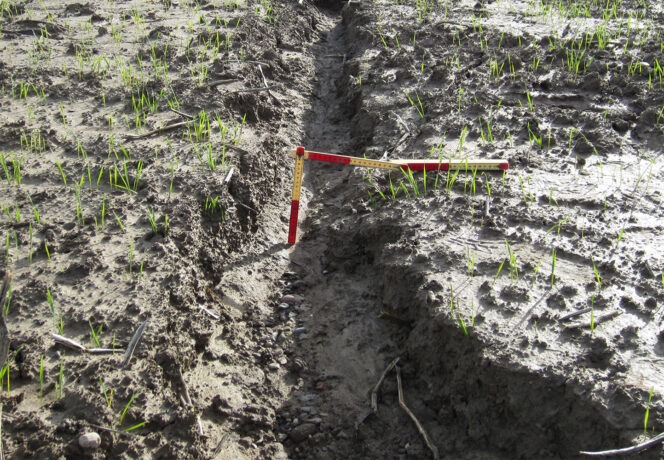
A long-term field study conducted by Agroscope, the Soil Protection Agency of the Canton of Bern and the University of Bern shows that soil erosion on arable land can be significantly reduced with the right measures – in particular, conservation tillage practices.
Zufferey V., Verdenal T., Reynard J.-S., Dienes-Nagy A., Belcher S., Lorenzini F., Rösti J., Gindro K., Spangenberg J. E., Viret O., Carlen C., Spring J.-L.
Tests carried out by Agroscope in the Valais region reveal that the Humagne Rouge grape variety yields better wines and is less susceptible to bunch shrivel when grapevines are not irrigated.
Previous criteria used to measure social sustainability have their limits in the case of family farms. We propose focusing on workload. Initial results show that this is an easy-to-use and meaningful indicator.
To reduce plant-protection product use, we need to know what behavioural patterns farmers follow when using plant-protection products in their crops. This was the subject of a study conducted by Agroscope in Switzerland.
Why do Swiss farmers complain about the administrative burden associated with the direct payments system? Studies conducted by Agroscope show that the issue is not the time required: other factors are more important.
In both sport and alternative agriculture, horses are once again being used as draught animals. Efficient power transmission plays an important role in the wellbeing of draught horses.
Divico, Agroscope’s new disease-resistant grape variety, is noted for the quality of its wines. Blending trials with the Pinot Noir variety have shown that Divico is also highly suitable for correcting colour intensity in the latter.
A study by Vetsuisse shows that the outdoor veal calf concept reduces antibiotic consumption in calf fattening by 80%. AGRIDEA has examined the economic viability of outdoor veal calf production and concludes that it cannot compete with conventional veal calf fattening.
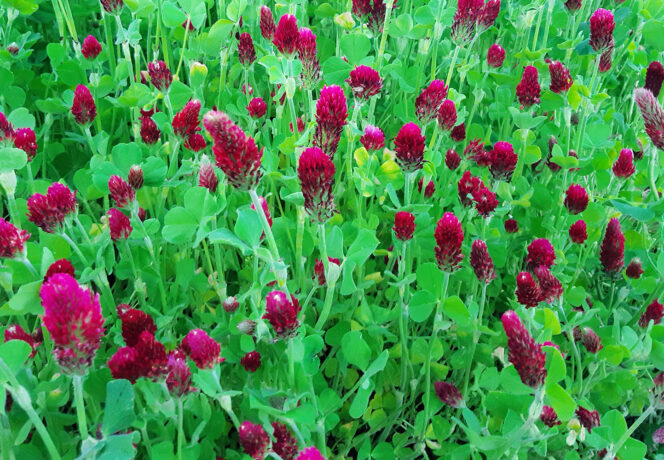
Crimson clover is essentially used as a catch crop in association with ryegrass. The comparative trial conducted in 2019-21 has led to the addition of two new acquisitions to the List of Recommended Varieties of Forage Plants.