Archive

770 posts

Plant production

Maltas A., Machet J.M., Le Roux C., Damay N., Sinaj S.

Evaluation of AzoFert®, a software tool for optimising nitrogen fertilisation of Swiss field crops

The French software tool AzoFert® is based on a complete and predictive dynamic nitrogen balance sheet to establish the nitrogen fertilization recommendation. This software tool uses modelling and measurement of the mineral nitrogen stock at the beginning of the balance in order to precisely adjust the fertilizer recommendation to the soil, climatic and cultural characteristics…
Plant production

Derron J., Breitenmoser S., Goy G., Grosjean Y., Pellet D.

Rape-stem weevil: effect on yield and action threshold

Rape-stem weevil (Ceutorhynchus napi Gyll.) has proven harmful for oilseed rape in Switzerland since the introduction of this crop during the Second World War. The impact of this pest on yield and the possibility of establishing an action threshold were determined during tests, from 1981 to 2008. Weevils invade oilseed rape crops in winter, once…
Plant production

Grieder C., Tanner P., Schubiger F.X., Boller B.

Six new Swiss-bred varieties of perennial ryegrass

In 2013, six new tetraploid varieties of early (Arcturus, Algira and Salmo) and late (Allodia, Vidalia and Soraya) perennial ryegrass (Lolium perenne L.) from the Agroscope breeding programme were admitted onto the Swiss List of Recommended Varieties for forage plants. The lineage of the three early varieties goes directly back to diploid Swiss ecotype material…
Plant production

Knapp S., Aebi R., Anders M., Brabant C., Hiltbrunner J.

Influence of variety and environment on quality traits in organic winter wheat

Measures for improving quality are currently being tested in Swiss wheat production. In cultivation, quality can be influenced by choice of site, management, and variety. In order to investigate the effects of variety and the environment, comprehensive quality tests were performed on 12 varieties in the Organic Wheat Trial Network in 2012 and 2013. It…
Plant production

Luginbühl C., Herzog C., Stettler P., Hiltbrunner J.

Approaches for optimising linseed cultivation in Switzerland

Despite state financial support (oilseed payments) for linseed, linseed is still a fairly insignificant oilseed crop in Switzerland. Over the last few years, however, the area under organic cultivation of this crop has been significantly expanded. With the aim of improving yield stability, in small-plot trials, comparisons of autumn vs. spring sowing and of two…
Plant production

de Werra P., Bussereau F., Kellenberger I., Dupuis B., Schaerer S., Keiser A.

Potato: the Pectobacterium Empire strikes back

Blackleg disease on potato is caused by several pectinolytic bacterial species and subspecies. Until 2012, most of the blackleg-diseased plants observed in Switzerland were infected with species belonging to the genus Dickeya. During 2013, two other species were found to be responsible for several blackleg infections: Pectobacterium wasabiae and Pectobacterium carotovorum subsp. brasiliense. The former…
Plant production

Suter D., Frick R., Hirschi H., Aebi Ph.

Testing Italian ryegrass: the acid test for 37 varieties

In 2012 to 2014, Agroscope tested 18 diploid and 19 tetraploid varieties of Italian ryegrass at five sites in terms of their suitability for cultivation; four of the diploid and eight of the tetraploid varieties had already been recommended, and were retested. Yield, vigour, juvenile development, competitive ability, persistence, winter-hardiness, resistance to leaf diseases and…
Plant production

Hebeisen Th., Graff L., Zanetti S., Herzog Ch.

Factors causing variable seed quality in rye and triticale

In seed production of rye kernels frequently do not meet the minimum requirements for germination under laboratory conditions due to mechanical seed deterioration, preharvest sprouting and heavy infection with snow mold. Some triticale lots contain too many foreign cereal grains because triticale often follows wheat in the rotation. Additionally, snow mold infection causes abnormal seedling…
Plant production

Frei P., Gindro K.

Ramularia collo-cygni, a new pathogenic fungus of barley

Leaf spot constitutes a threat to barley cultivation, leading to significant quantitative and qualitative yield losses. Although these symptoms can be due to physiological stress, they are primarily caused by infestation with the Ramularia collo-cygni fungus. In the absence of sporulation, these two types of leaf necrosis are practically impossible to tell apart. In order…
Plant production

Carrera E., Riot G., Reust W., Dutoit J.-P., Torche J.-M., Dupuis B.

Physiology of the potato varieties and consequences for the grower

The physiology of the potato tuber is characterized by two consecutive periods: the dormancy and the incubation. During the dormancy period, the tuber is under vegetative rest and is unable to sprout. The incubation period begins at sprouting and ends when the first progeny tuber appears on the stolons. The duration of both periods varies…
Plant production

Levy L., Ellemsi Y., Pellet D.

Effects of variety and environment on wheat viscosity

Wheat viscosity is a qualitative characteristic of cereals. Certain studies indicate positive effects for human health linked to high viscosity, such as the lowering of cholesterol or a reduction in cancer risks. Where the feeding of livestock is concerned, however – especially monogastric animals – low levels of viscosity are desirable. In fact, among other…
Plant production

Maltas A., Charles R., Pellet D., Dupuis B., Levy L., Baux A., Jeangros B., Sinaj S.

Evaluation of two methods for optimising nitrogen fertilisation of field crops

Two methods are used in Switzerland to optimise the nitrogen fertilisation of field crops: the «corrected norms» method and the Nmin method. Each of the methods suggests a different approach: the «corrected norms» method takes into account field characteristics influencing nitrogen availability, while the Nmin method is based on the measurement of mineral nitrogen present…
Plant production

Kruse S., Seidl I.

Drought in fruit-growing. Survey among farmers in Northeast and Northwest Switzerland

According to current climate scenarios, drought could become a major challenge for agriculture in Switzerland. To better understand the practitioner’s perspective, we surveyed fruit-growers in Northeast and Northwest Switzerland to investigate the previous impact of drought and the countermeasures taken, as well as the information requirements and the willingness to act on the part of…
Plant production

Goelles M., Bravin E., Kuske S., Naef A.

Challenges of the residue-free apple production

Crop protection in general and apple crop protection in particular rely on pesticides, but consumers demand a reduction of pesticide use and ideally an elimination of pesticide residues in order to minimize the impact on the environment and the risk for human health. Producers need information and advice to establish sustainable production systems that reduce…
Plant production

Schöneberg A., Perren S., Naef A.

The search for robust varieties for sustainable fireblight management

Robust apple and pear varieties are an important tool in sustainable fireblight management. Two artificial inoculation methods are used for assessing a pome-fruit cultivar’s susceptibility to fireblight: shoot inoculation and blossom inoculation. Since 2013, Agroscope has for the first time been in a position to conduct artificial blossom inoculation tests on an outdoor trial plot…
Plant production

Bravin E., Hanhart J., Carint D., Dietiker D.

Support Obst Arbo: results for the professional arboriculture

In 1947 today’s date Agroscope started the collection of on farm data to draft extension information and indices for grower prices. Agridea and Agroscope lead the project Support Obst Arbo (SOA), which gives detailed basics for growers, extension and research. 20–25 references fruit farms deliver their data to the project to evaluate the on farm…
Plant production

Keller M., Total R., Krauss J., Neuweiler R.

Reduction of yellow nutsedge infestation levels in highly infested fields: Continuous maize cropping as potential control strategy

Yellow nutsedge (Cyperus esculentus L.) is among the most dreaded weeds worldwide. In Switzerland, it has increasingly become a problem for vegetable growers and arable farmers. This weed propagates and disperses via vegetative tubers in the soil. Producers are facing an important challenge: They have not only to stop the weed’s further dispersal but also…
Plant production

Forrer H.R., Musa T., Schwab F., Jenny E., Bucheli T.D, Wettstein F.E., Cao K., Vogelgsang S.

Control of Fusarium fungi and mycotoxins in wheat with rhubarb, alder buckthorn and tannins

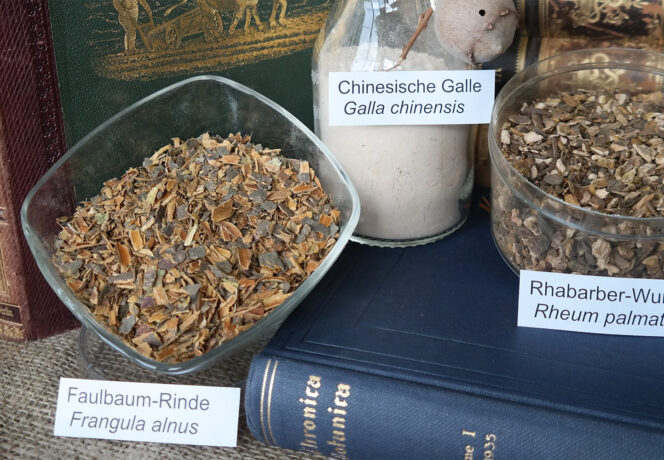
During the past few years, the importance of Fusarium fungi and their toxins in wheat has increased significantly. This study demonstrated that fusaria can be controlled organically with medicinal plants: Suspensions of Galla chinensis and tannic acid inhibited spore germination and mycelial growth of Fusarium graminearum in vitro by 75 to 100 %. In climate…